
Treatment
Treating myocardial infarction
A heart attack is a medical emergency. The more time that passes, the greater the risk of permenant damage to the heart.
First line
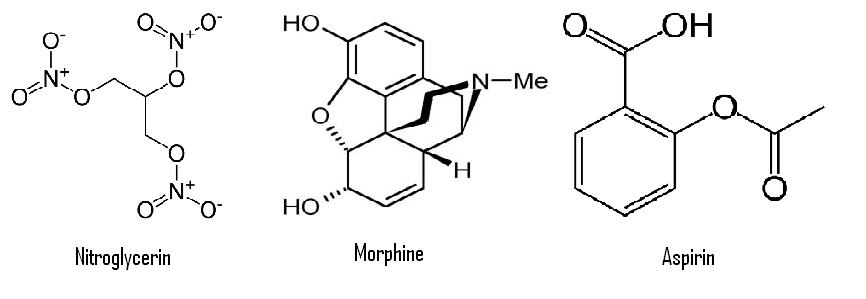
On arrival at hospital a patient suffering a heart attack will be administered a combination of drugs, as well as oxygen. Aspirin, morphine and nitroglycerin are the standard drugs. Aspirin prevents the formation of new thrombi (clots) while morphine is classically the preferred pain relief drug due to its ability to dilate blood vessels, which aids in blood flow to the heart as well as its pain relief properties.
Reperfusion
This is the restoration of blood flow to ther tissue that has had its blood supply cut off after a heart attack. This may be either:
- Thrombolytic therapy - The administration of 'clot busting' drugs. These work by activating the enzyme plasminogen, which breaks down fibrin, the backbone of the clot.
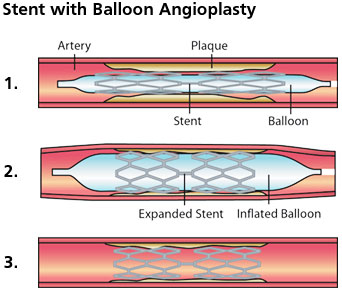
- Coronary angioplasty - the inflation of a balloon within the coronary artery to crush the plaque into the walls of the artery. Also a stent may be implanted into the artery to hold it open.
- Bypass surgery - Arteries and/or veins are transplanted from another part of the body and grafted onto the heart to bypas any blocked arteries.
Treating Angina
The main goals of treatment in angina pectoris are relief of symptoms, slowing progression of the disease, and reduction of future events, especially heart attack and death. Aspirin has been shown to be usefrul for this purpose. Beta blockers are also widely administered. These antagonise beta-adrenergic receptors in the heart, thus attenuating the effects of adrenaline. This slows the heart, reducing strain and also helps prevent arrhythmias. Calcium channel blockers such as nifedipine are also used as they reduce the increase in intracellular calcium which causes muscle contraction. This lessens the contraction force of the heart and reduces blood pressure.