
Diseases
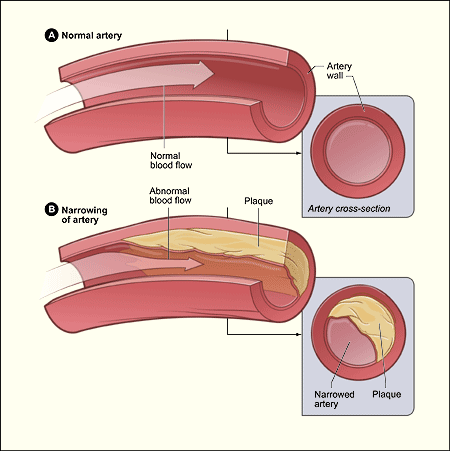
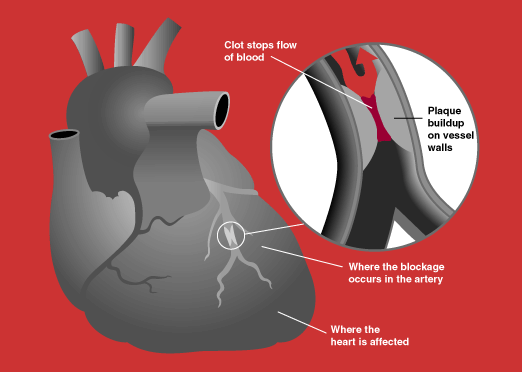
The coronary vessels are of great clinical significance. Their occulsion is the leading cause of death in the western world. Occlusion usually results from the build up of plaque known as atheroma. This results from excess cholesterol in the blood which, over many years may form plaques that narrow the arteries. This reduces blood flow to the heart and causes pain known as angina. If a clot suddenly forms on one of the plaques then a coronary atrery may become completely blocked. If this happens then a myocardial infarction ( heart attack) will result. Angina and heart attack are symptoms of coronary heart disease, which is the condition of having an abundance of atheromatus plaques in the coronary arteries.
Plaque formation
Atheromatus plaques are found in the arteries of most humans and may begin to form in some children younger than 1 year old. Atherogenesis happens when white blood cells take up large amounts of oxidized LDL (low-density lipoprotein). They accumulate in the arteries and have large cell membranes, with associated large amounts of cholesterol. When foam cells die, their contents are released, which attracts more macrophages and creates an extracellular lipid core near the center to inner surface of each atherosclerotic plaque. Conversely, the outer, older portions of the plaque become more calcific, less metabolically active and more physically stiff over time.
Myocardial Infarction
At times of increased cardiac output, such as exercise, mechanical stress on a vulnerable plaque may cause it to rupture. The fibrous cap that covers the plaue may be ripped open, exposing its softer lipid core.After rupturing, a blood clot (thrombus)may form at the site which then occuldes blood flow through the artery. This is a medical emergency as the cardiac muscle supplied by that coronary artery will become ischemic, i.e. will be starved of blood and thus starved of oxygen. If left untreated these cardiac muscle cells will die resulting in potentially fatal arrhythmias or cardiac arrest. The damaged cells do not grow back, but are replaced my non-functional collagen.
Risk Factors for heart attack:
- Older Age
- Male sex
- Smoking
- High blood cholesterol
- High homocysteine in blood
- Diabetes
- High Blood pressure
- Obesity
- Stress